
taly arrived at the 1938 World Cup as defending champions, but the tournament in France was anything but a victory lap. The political climate hung heavy over the competition—Mussolini's regime demanded another triumph as propaganda, and the squad carried that weight into every match. Vittorio Pozzo。the only coach to win two World Cups, built a side that mixed ruthless efficiency with flashes of brilliance. The 1938 World Cup champion would not be a team of naive romantics;it would be a hardened, tactically disciplined unit that knew how to win ugly when necessary.The format was pure knockout from the first whistle。
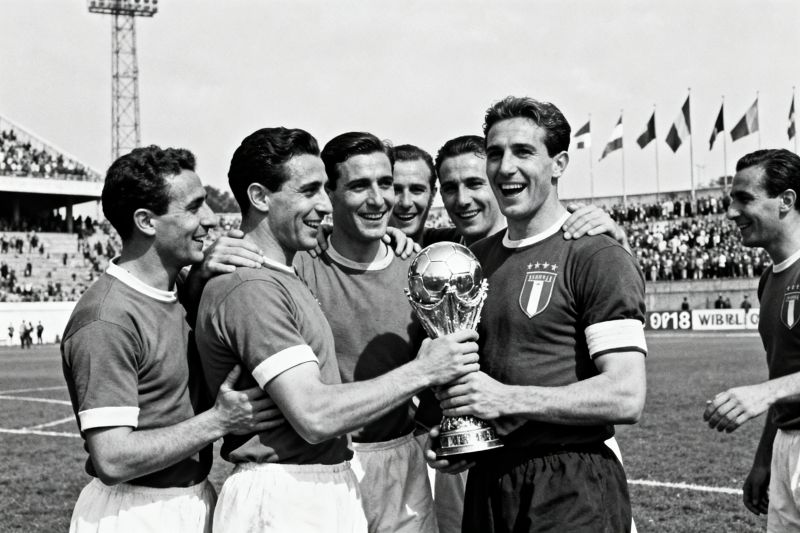
leaving no room for slow starts. Italy's opening match against Norway in Marseille was a slog—a 2-1 extra-time win that exposed nerves and heavy legs. Piola's winner in the 94th minute felt less like dominance and more like survival. That scrappy afternoon set the tone: the Azzurri would grind when they had to. Next came France, the hosts, in a quarter-final that could have derailed everything. Instead, Italy delivered a clinical 3-1 performance, with Colaussi and Piola silencing a partisan crowd. It was the kind of away performance that separates contenders from pretenders.The semi-final against Brazil is often remembered for a single decision. Pozzo rested several starters, including the talismanic Meazza, trusting his squad depth. Brazil, led by Leônidas, were the tournament's great entertainers, but Italy's defense smothered them in a 2-1 win. That match showcased the 1938 World Cup champion's defining trait: flexibility. Pozzo could shift from cautious counter-attacking to controlled possession depending on the opponent, and his players executed without complaint. It wasn't glamorous。but it worked.The final against Hungary in Paris was a different story entirely. Italy exploded into a 3-1 lead by halftime, with Gino Colaussi scoring twice and Silvio Piola adding another. Hungary's Sarosi pulled one back, but Italy's response was immediate and emphatic—Piola's second goal in the 35th minute effectively ended the contest. The 4-2 scoreline flattered Hungary slightly;Italy controlled the tempo and never looked rattled. Watching the grainy footage。you notice how compact Italy stayed, how quickly they transitioned from defense to attack. That was Pozzo's genius: simple patterns, repeated to perfection.What strikes me most about the 1938 World Cup champion is how little credit they get in retrospectives. Brazil's 1970 or Spain's 2010 get endless praise for artistic flair, while Italy's back-to-back wins are often brushed aside as products of a weaker era. That feels unfair. They beat France on home soil, outthought Brazil, and dismantled Hungary in the final. The political backdrop makes it complicated—no one wants to celebrate a team tied to fascist propaganda—but the football itself deserves scrutiny. Pozzo's Italy was pragmatic, adaptable, and mentally unbreakable. In a tournament played under the gathering storm clouds of war。they were the best team by a clear margin. That's not a romantic story, but it is the truth.